Singapore VCC insights
Singapore Wealth Management Hub in 2026: A Measured Case Built on Official Data
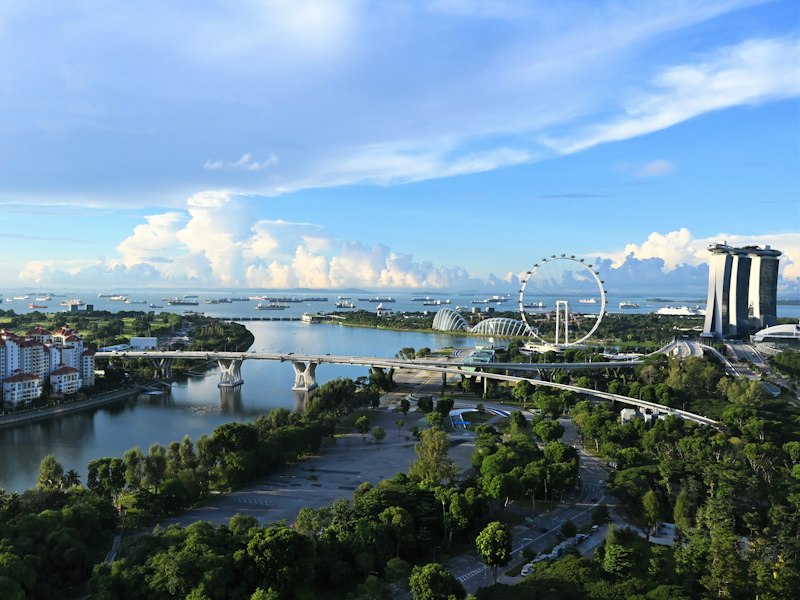
Short answer: On MAS figures, Singapore is a large and still-growing wealth management centre: S$6.7 trillion of assets under management at 31 December 2025, net inflows up 29% and 76% of money sourced from abroad. The official record is thinner on family office assets and talent, so judge Singapore pillar by pillar, not on headline totals.
The Singapore wealth management hub is usually sold with one number and a list of adjectives. This page takes the opposite approach. It sets out what the Monetary Authority of Singapore (MAS) and the Inland Revenue Authority of Singapore (IRAS) actually publish about the hub’s size, legal infrastructure, regulation, tax and talent, and flags where the official record stops. Every figure below was checked on a MAS or IRAS source on 7 November 2026, and where those sources are silent, we say so. This page replaces our May 2026 overview, which predated both the Singapore Asset Management Survey 2025 and the revised single family office framework that took effect in June 2026.
Key facts at a glance
- Assets under management (AUM) grew 10% to S$6.7 trillion (US$5.2 trillion) as at 31 December 2025, from S$6,067 billion a year earlier (MAS Singapore Asset Management Survey 2025).
- Net inflows grew 29% year on year in 2025, to S$376 billion on MAS’s chart data, which MAS attributes to new mandates acquired and managed from Singapore.
- 76% of AUM is sourced from outside Singapore and 88% is invested outside Singapore.
- 1,320 licensed fund management companies, and 1,406 variable capital companies (VCCs) representing 3,443 sub-funds, as at 31 December 2025.
- More than 2,000 single family offices (SFOs) received tax incentives under sections 13O and 13U of the Income Tax Act 1947 as at end December 2025 (MAS written parliamentary reply, 5 August 2026).
- The revised SFO licensing exemption took effect on 15 June 2026; existing SFOs have until 15 June 2027 to comply and notify MAS.
- Companies pay corporate income tax at a flat 17% of chargeable income (IRAS).
This article is general information only and is not legal, tax or immigration advice. For matters needing legal advice, we work with a panel of experienced Singapore law firms.
How large is the Singapore wealth management hub on official data?
MAS puts total AUM at S$6.7 trillion as at 31 December 2025, up 10% in the year. Its parliamentary reply of 5 August 2026 gives the growth rate more precisely as 10.1% and describes the total as a record.
The Singapore Asset Management Survey 2025 also prints a six-year series, which is more useful than a single year because it shows how the hub behaved through a market downturn. The table below reproduces MAS’s chart data labels for total AUM and net inflows, in Singapore dollars.
| Year (at 31 December) | Total AUM (S$ billion) | Net AUM inflows (S$ billion) |
|---|---|---|
| 2020 | 4,654 | 387 |
| 2021 | 5,415 | 448 |
| 2022 | 4,909 | 435 |
| 2023 | 5,407 | 193 |
| 2024 | 6,067 | 290 |
| 2025 | 6,680 | 376 |
Two readings follow. First, AUM fell in 2022, when markets fell, yet net inflows that year stayed close to the 2021 level. Money kept arriving even when valuations shrank. Second, net inflows dropped sharply in 2023 and have since recovered but not to their 2021 and 2022 levels. The measured case rests on inflows persisting through a cycle, not on unbroken growth. Our detailed note on the 2025 survey covers its page-by-page figures, including alternatives and private markets.
Is the growth coming from new money or from market gains?
Both, and MAS says so. It describes the 2025 rise as coming on the back of robust market performance and net inflows, and reports that net inflows grew 29% on new mandates acquired and managed from Singapore.
The composition matters for a family choosing a base. MAS reports that discretionary mandates accounted for more than half of total AUM in 2025. That indicates that investment decisions, not just booking and custody, are being made by professionals based in Singapore. Traditional AUM grew 9%, while alternatives grew only 0.4%. MAS explains that the alternatives figure reflects the downsizing of one large manager, offset by several new entrants, and that excluding the downsizing, alternatives grew 9%.
The survey also shows how international the money is. 76% of AUM is sourced from outside Singapore and 88% is invested outside Singapore. A Singapore base therefore does not imply a Singapore-heavy portfolio. The local investment conditions that families meet come from the terms of the tax incentives, not from the hub itself; our guide to choosing between 13O and 13U for a new SFO fund sets those out.
What legal infrastructure underpins the hub?
The core is a licensing regime under the Securities and Futures Act 2001, a dedicated fund corporate vehicle under the Variable Capital Companies Act 2018, and a supporting professional services market. The survey quantifies the first two.
MAS reports 1,320 licensed fund management companies as at December 2025, a net increase of 22 in the year, with investment teams managing client assets out of Singapore. On the vehicle side, 1,406 VCCs had been incorporated or re-domiciled in Singapore by 31 December 2025, representing 3,443 sub-funds, and these umbrella or standalone VCCs were managed by over 50% of regulated fund management companies. MAS’s report describes the ecosystem as supported by lawyers, tax advisors, corporate secretaries, fund administrators and fund directors, and as allowing investment management and fund domiciliation to be co-located.
Co-location is the practical point: vehicle, manager and service providers can sit under one regulator, though treaty access and substance still need testing for each holding.
How does MAS now regulate single family offices?
Since 15 June 2026, a qualifying SFO operates under a structure-agnostic class exemption from licensing, rather than case-by-case approval. It must notify MAS, keep accounts with an MAS-licensed bank and file an annual return stating its total AUM and its bank.
MAS’s FAQs on the licensing exemption framework, last revised on 31 July 2026, set the conditions out in paragraph 5(1)(ba) of the Second Schedule to the Securities and Futures (Licensing and Conduct of Business) Regulations. In summary:
- The SFO may manage funds only for family members (including family trusts and wholly owned family corporations), charities funded exclusively by the family, and key employees.
- Assets of key employees who are not family members must not exceed 10% of the SFO’s total AUM, and such employees may hold a non-controlling stake of up to 10%.
- The SFO must be incorporated in Singapore.
- The SFO and each investment vehicle it manages must hold an account with an MAS-licensed bank. A foreign-incorporated vehicle may instead bank with a regulated bank in a jurisdiction whose anti-money laundering standards are consistent with those of the Financial Action Task Force.
- “Family member” covers lineal descendants of a common ancestor no more than five generations removed from the youngest generation that established the SFO, together with spouses, adopted and step-children and certain in-laws.
The compliance sequence for a new SFO runs as follows:
- Incorporate the SFO in Singapore and confirm that the ownership and client base meet the conditions above.
- Open the required bank accounts for the SFO and its investment vehicles before filing, because the notification asks for those account details.
- File the Notice of Commencement of Business with MAS within 14 days of starting operations, with a declaration signed by a family member who provided the assets and a director of the SFO.
- File the first annual return within four months of the end of the SFO’s financial year. MAS states that no further extension will be granted.
Existing SFOs have until 15 June 2027. Families whose structure does not fit should read our note on restructuring options before 15 June 2027. Where an SFO also holds a 13O or 13U award, MAS’s FAQs point out that the incentive conditions are separate from the licensing exemption and continue to apply under the fund’s letter of award.
What does the tax system offer a wealth structure, and what does it not?
Singapore offers a flat 17% corporate rate, general non-taxation of overseas income received by individuals, and specific incentive schemes for family office funds. None of these is unconditional, and the incentives in particular carry ongoing conditions.
At company level, IRAS states that a company is taxed at a flat rate of 17% of its chargeable income, whether local or foreign. For individuals, IRAS’s guidance is that overseas income received in Singapore, including income deposited into a Singapore bank account, is generally not taxable. There are listed exceptions, the most relevant to families being overseas income received through partnerships based in Singapore.
For investment vehicles, the schemes under sections 13O and 13U of the Income Tax Act 1947 are the main tools for SFO funds. MAS’s parliamentary reply counts more than 2,000 SFOs receiving these incentives as at end December 2025, managing money for families predominantly from Asia Pacific, followed by Europe and the Americas. MAS’s FAQs point to the fund’s letter of award, the relevant MAS circulars and the subsidiary legislation for the incentive terms, so a family should model whether it will meet them every year rather than only at application. A principal relocating personally should also check how the first year of residence is taxed; our sister site covers first-year tax for arrivals late in the year.
What does official data say about talent and market development?
Less than the marketing implies. The survey does not publish headcount for investment professionals, so claims about the depth of the talent pool rest on indirect evidence.
The indirect evidence is reasonable. MAS reports that discretionary mandates make up more than half of AUM, which requires investment staff on the ground, and that 1,320 licensed managers run investment teams from Singapore. The parliamentary reply states that SFOs increase demand for jobs in asset management and in private banking, legal and tax advisory, accounting and fund administration. The survey also lists MAS initiatives that support the ecosystem: the Equity Market Development Programme introduced in 2025, under which MAS invests in strategies focused on Singapore public equities; an Exchange Traded Fund industry taskforce co-led with the Singapore Exchange; and the Private Market Programme, aimed at anchoring managers in private equity, private credit and infrastructure. For licensed managers, hiring also brings regulatory steps, such as the representative notification for portfolio managers.
Where does the official record stop?
The biggest gap is family office wealth itself. MAS publishes no aggregate AUM for SFOs, and its SFO count covers only incentive holders.
The survey’s methodology adds further limits. It covers 1,346 respondents across banks, finance and treasury centres, capital markets services licensees, financial advisers, insurers and exempt entities. It excludes direct investments by government-related entities and adjusts for double counting where two respondents report the same mandate. The table below separates what the official sources settle from what they leave open.
| Pillar | What MAS or IRAS publishes | What remains unsettled |
|---|---|---|
| Scale | S$6.7 trillion AUM; six-year AUM and inflow series | How much belongs to private families |
| Family offices | More than 2,000 incentive-holding SFOs | Total SFO numbers and SFO AUM |
| Vehicles | 1,406 VCCs and 3,443 sub-funds | AUM held in VCCs and the split by user type |
| Regulation | SFO exemption conditions and deadlines | Whether MAS will publish data from the new annual returns |
| Tax | 17% corporate rate; treatment of overseas income for individuals | Each family’s position under incentive conditions and treaties |
| Talent | Qualitative statements; discretionary share above half | Headcount and cost of investment staff |
The new annual return for SFOs requires a statement of total AUM, so MAS will hold that data once the transition ends. It has not announced whether it will publish aggregates.
How should a family compare Singapore with other hubs?
Compare like with like, using each jurisdiction’s own official sources, and decide on the pillar that matters most to your family rather than on headline AUM.
A Singapore base suits families that want a regulated, bank-centred structure with a local fund vehicle and managers on the ground; it suits less well a family that wants minimal reporting. Our hub comparisons apply the same discipline: Singapore against Hong Kong on licensing and pending concessions, and the eleven-hub scorecard for principals still choosing between centres. For planning the Singapore side, see the free tools page of Raffles Corporate Services.
Frequently asked questions
What is Singapore’s total AUM according to MAS?
S$6.7 trillion (US$5.2 trillion) as at 31 December 2025, up 10% from S$6,067 billion at the end of 2024. MAS’s parliamentary reply of 5 August 2026 gives the growth as 10.1%.
How many family offices are there in Singapore?
MAS has published only the incentive count: more than 2,000 SFOs receiving tax incentives under sections 13O and 13U as at end December 2025. SFOs without an incentive are not included in that figure.
Does an SFO in Singapore need a licence?
Not if it meets the class exemption conditions. A qualifying SFO notifies MAS within 14 days of starting operations, maintains the required bank accounts and files an annual return within four months of its financial year end.
Is overseas income taxed when a resident individual brings it into Singapore?
IRAS’s guidance is that overseas income received in Singapore is generally not taxable, subject to listed exceptions such as overseas income received through a Singapore partnership. Each case should be checked against the IRAS rules.
Why do net inflows matter more than AUM growth?
AUM moves with market prices; net inflows measure new money arriving. MAS reports net inflows of S$376 billion in 2025 on its chart data, up 29%, but still below the 2021 and 2022 levels.
Need help with this? Call, SMS or WhatsApp +65 8501 7133, or email hello@rafflescorporateservices.com. Raffles Corporate Services works with a panel of corporate and employment law firms; this article is general information, not legal advice.
Last reviewed: 7 November 2026. The Editorial Team, Variable Capital Companies Act.