Singapore VCC insights
Redomiciliation to Singapore or Hong Kong: Moving a Family Holding Company
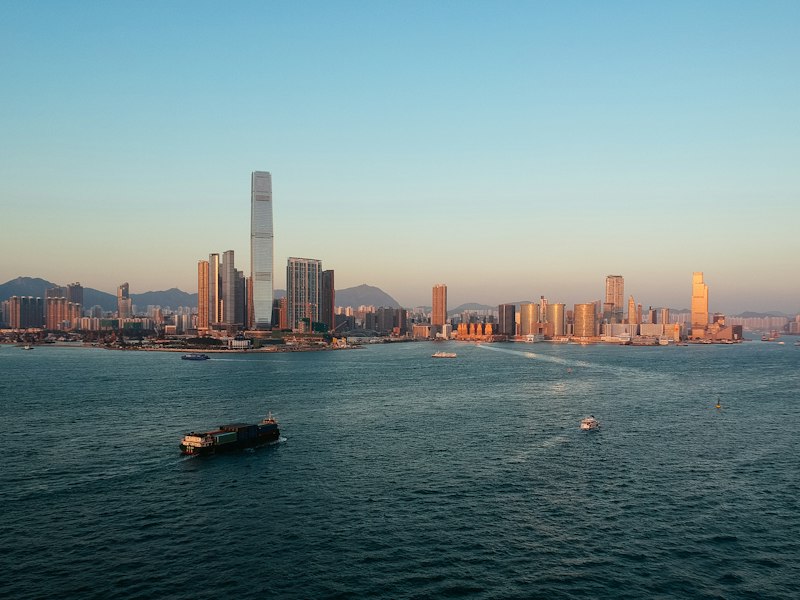
Short answer: Both Singapore and Hong Kong let a foreign family holding company re-domicile as the same legal person. Singapore applies a size test (two of: assets over S$10 million, revenue over S$10 million, more than 50 employees) and takes 40 working days. Hong Kong has no size test, estimates two weeks and taxes territorially, not by residence.
Key facts at a glance
- Singapore: inward transfer of registration under Part 10A of the Companies Act 1967 (ss 355 to 364A) and the Companies (Transfer of Registration) Regulations 2017; ACRA fee S$985; 40 working days from complete submission.
- Singapore size test: any two of total assets over S$10 million, annual revenue over S$10 million, or more than 50 employees; a parent company is assessed on a consolidated basis.
- Hong Kong: the Companies (Amendment) (No. 2) Ordinance 2025 came into operation on 23 May 2025, adding Part 17A (re-domiciled companies) to the Companies Ordinance (Cap. 622).
- Hong Kong fee: HK$6,050 for an electronic application (including a non-refundable HK$1,030 lodgement fee); about 2 weeks if documents are in order; no economic substance test.
- Deregistration deadlines after approval: 60 days in Singapore (extendable at S$200 per 60-day extension); 120 days in Hong Kong (extendable by the Registrar).
- Tax basis: Singapore taxes a resident company at 17% and tests residence by control and management; Hong Kong does not tax on residence or domicile and charges profits tax at 8.25% on the first HK$2 million of assessable profits and 16.5% above that.
This article is general information only and is not legal, tax or investment advice. For matters needing legal advice, we work with a panel of experienced Singapore law firms.
Many Asian families hold their businesses and portfolios through a holding company incorporated in the British Virgin Islands (BVI), Cayman or Bermuda. Since May 2025, Hong Kong has offered a statutory inward route alongside Singapore’s. This article compares redomiciliation to Singapore with redomiciliation to Hong Kong for a family holding company only: eligibility, documents, timing, cost and tax continuity. Fund vehicles (VCC and Open-ended Fund Company) are outside its scope. All sources cited were checked on 25 October 2026.
What does redomiciliation to Singapore or Hong Kong actually change?
In both places the company keeps its legal identity; only its place of incorporation changes. No new entity is created, so contracts, assets, liabilities and litigation stay with the same company.
The Accounting and Corporate Regulatory Authority (ACRA) says a re-domiciled company retains its “corporate history and identity”, “existing contracts”, “assets and liabilities” and “legal rights and obligations”. Hong Kong’s Companies Registry (CR) says re-domiciliation “does not have the effect of creating a new legal entity” and does not affect “any property, rights, obligations, liabilities”. In both places, once registered, the company is treated as a locally incorporated company and must comply with the local companies legislation in full. One practical difference: Hong Kong’s regime is inward only. The CR states that it “allows non-Hong Kong companies to re-domicile to Hong Kong but not the other way round”, so a family should treat a move to Hong Kong as a long-term decision.
Who qualifies for redomiciliation to Singapore, and is there a size test?
Yes. A foreign company must meet any two of three size criteria, pass solvency tests and be allowed to leave by its home law. The size test is where most family holding companies succeed or fail.
ACRA’s transfer of registration page (last updated 6 July 2026) requires any two of: total assets valued over S$10 million, annual revenue over S$10 million, or more than 50 employees. The FAQ on that page settles the group question that matters for holding companies: a parent company is assessed “on a consolidated basis, even if its subsidiaries are not registering”, while a subsidiary is assessed on a standalone basis, or can qualify through a parent that is already in Singapore or registering at the same time. A holding company sitting above an operating group with real revenue will usually pass on consolidated figures. A pure portfolio company with large assets but little revenue and no staff meets only one limb and fails.
The financial health tests go beyond a balance sheet check: the company must be able to pay debts as they fall due over the 12 months after applying, have assets at least equal to liabilities including contingent liabilities, and not be in judicial management, liquidation or similar proceedings. It must also be authorised to transfer under its home law, apply in good faith and have passed its first financial year end.
Who qualifies for redomiciliation to Hong Kong?
Any foreign company comparable to a Hong Kong company with share capital can apply, with no size threshold. The conditions focus on company type, integrity, creditor and member protection, and solvency.
The CR’s Guide on Company Re-domiciliation (May 2025) lists the conditions: the home law must permit the transfer; the company type must be the same or substantially the same as a Hong Kong private or public company limited by shares, or unlimited company with share capital; the first financial year end must have passed; the application must be in good faith and not intended to defraud creditors; members’ consent must be obtained; and the company must be able to pay debts falling due within 12 months of the application date and not be in liquidation. Nothing in those conditions refers to assets, revenue or headcount, and the CR’s FAQ states that “there is no economic substance test imposed”. For a small or asset-only family company that cannot meet ACRA’s two-of-three test, this is the decisive difference.
How do the two regimes compare side by side?
Hong Kong is cheaper to enter, faster and has a lower entry bar; Singapore applies a size filter and a longer review but allows a shorter period to clean up the home register.
| Point | Singapore (Companies Act 1967, Part 10A) | Hong Kong (Cap. 622, Part 17A) |
|---|---|---|
| In force | Regulations dated 2017; amended 2025 to update references to Part 10A | 23 May 2025 |
| Size test | Two of: assets over S$10 million, revenue over S$10 million, over 50 employees (parent on consolidated basis) | None in the published conditions; no economic substance test |
| Solvency | Pay debts for 12 months; assets at least equal to liabilities including contingent liabilities | Pay debts falling due within 12 months; not in liquidation |
| Member approval | Per home law and constitution | Per home law or constitution; otherwise a 75% members’ resolution |
| Financial statements | Audited statements for the last financial year (consolidated for a parent, with fallbacks) | Accounts as at the latest practicable date; audited if home law or exchange rules require audit |
| Home-law legal opinion | Not listed by ACRA | Required, issued within 35 days before application |
| Government fee | S$985 | HK$6,050 electronic or HK$6,725 paper (lodgement part non-refundable) |
| Processing | 40 working days from complete submission | About 2 weeks if documents are in order |
| Deregister at home | Proof within 60 days; S$200 per 60-day extension | Evidence within 120 days; extension at Registrar’s discretion |
| Existing charges | Register within 30 days | Register within one month |
| Onward move | Not covered here | Not possible: inward-only regime |
Fees exclude professional and home-registry costs.
What documents and steps does each jurisdiction require?
Both require certified constitutional documents, board confirmations and a post-approval deregistration filing. Hong Kong front-loads more legal certification; Singapore front-loads audited financial statements.
For Singapore, ACRA requires a certified certificate of incorporation and constitution (certified within four months before applying unless ACRA approves otherwise), certified English translations, audited financial statements for the last financial year, a proposed Singapore constitution, and declarations by the corporate service provider, proposed officers and the foreign entity’s directors. The name must first be reserved as a private or public company limited by shares. ACRA states that the financial statements submitted “will not be made public for purchase”.
For Hong Kong, the Guide’s checklist includes Form NNC6, the proposed articles, certified constitutional documents, accounts, a directors’ certificate issued within 35 days before applying (covering notice to all creditors, contractual consents and a 12-month solvency opinion), a home-law legal opinion issued within 35 days, and business registration notice IRBR5. The CR adds that gazette or newspaper notice “could not serve the same purpose”: each creditor must be told directly.
A practical sequence for either route:
- Confirm the home jurisdiction allows continuation out and what consents and creditor notices it requires.
- Test eligibility: for Singapore, the size test on consolidated figures; for both, 12-month solvency.
- Collect lender and co-investor consents; Hong Kong requires a board certificate that these were “obtained or waived”.
- Prepare certified documents, financial statements and the new constitution or articles, and for Hong Kong the legal opinion inside the 35-day window.
- File through Bizfile in Singapore or with the CR in Hong Kong.
- After approval, register existing charges, file member returns (Hong Kong Form NSC21 within 15 days) and deregister at home within 60 days (Singapore) or 120 days (Hong Kong).
Does the company’s tax position carry over after redomiciliation to Singapore?
Largely yes, through a specific framework, but residence still depends on where the board actually decides strategy. Re-domiciliation makes the company Singapore incorporated; it does not by itself make it Singapore tax resident.
The Inland Revenue Authority of Singapore (IRAS) e-Tax Guide “Tax Framework for Variable Capital Companies” (Fourth Edition, 22 April 2026) refers at para 5.28 to “the existing tax framework for the redomiciliation of companies into Singapore”, citing sections 34G, 34H and 107(24) to (26) of the Income Tax Act 1947. As that guide describes the parallel VCC rules, expenses incurred before registration for a business carried on outside Singapore, for which relief was given elsewhere, are not deductible again; and para 5.30 notes that, “as with redomiciled companies”, the start-up tax exemption scheme does not apply. A re-domiciled holding company should therefore not budget for start-up relief.
IRAS treats a company as resident where control and management, meaning strategic decision-making, is exercised. Non-Singapore incorporated companies are generally not eligible for a certificate of residence, so re-domiciling removes that obstacle. But foreign-owned investment holding companies with purely passive or foreign-sourced income are generally not treated as resident unless they show control and management in Singapore and valid reasons for a Singapore office. A real Singapore board is what turns the new incorporation into treaty access; see our note on the Singapore tax treaty network for family offices. Separately, section 10L of the Income Tax Act 1947 taxes foreign-sourced disposal gains received in Singapore by an entity of a relevant group that lacks adequate economic substance in Singapore, for disposals on or after 1 January 2024 (IRAS e-Tax Guide on gains from the sale of foreign assets, Third Edition, 6 June 2025). Our section 10L substance guide covers the test for holding companies.
How does Hong Kong tax a re-domiciled holding company?
Hong Kong taxes profits sourced in Hong Kong from a business carried on there, regardless of residence, and gives targeted transitional rules and a unilateral credit for exit tax paid at home.
The Inland Revenue Department’s (IRD) page on the re-domiciliation regime states that Hong Kong “does not impose tax on the basis of residence or domicile” and that, under section 14 of the Inland Revenue Ordinance (Cap. 112), profits tax applies to profits arising in or derived from Hong Kong, “excluding profits arising from the sale of capital assets”. For treaty purposes, a re-domiciled company is regarded as incorporated in Hong Kong and so a Hong Kong resident under its comprehensive double taxation agreements, and can apply for a Certificate of Resident Status.
New Schedule 17L to the Ordinance sets transitional deduction rules and a unilateral tax credit where the home jurisdiction taxed unrealised gains because of the move. The credit can be claimed in the re-domiciliation year or any later year of assessment, capped at the lower of the foreign tax paid and Hong Kong profits tax on the relevant income, with any excess deductible. Families facing a home-country exit charge should model this against Singapore’s position.
What if the holding company does not qualify for redomiciliation to Singapore?
The usual alternative is a new Singapore holding company that acquires the existing company’s shares from the family in exchange for its own shares. This works at any size but is a new entity, not a continuation.
Because the old company survives as a subsidiary, its contracts and bank mandates stay where they are, and lenders may need to consent to the change of control. Stamp duty and home-country tax on the share exchange should be modelled before acting. If the offshore company remains in the group, our comparison of a BVI holding company and a Singapore company explains the substance and section 10L issues of running it from Singapore. A family that fails Singapore’s size test could re-domicile to Hong Kong instead, but should weigh that the Hong Kong regime allows no onward move.
Does the 20 October 2026 Companies Act change affect redomiciliation to Singapore?
Not directly. ACRA’s announcement of the second phase of the Corporate and Accounting Laws (Amendment) Act 2025, which commenced on 20 October 2026, lists six key changes, and none concerns transfer of registration.
The changes do affect a company once it has re-domiciled. Annual returns must now confirm that ACRA’s records of officers, members and the registered office are accurate, and the registered office no longer needs minimum public opening hours, although records must be available for inspection for at least two hours on each relevant business day after reasonable notice. A re-domiciled company’s first Singapore financial year starts right after its last foreign year end, and a non-listed company must hold its annual general meeting within six months of the year end. For the wider Singapore and Hong Kong family office picture, see our Singapore vs Hong Kong family office comparison.
Frequently asked questions
Can an investment holding company with no employees use the Singapore route?
Only if it meets two of the three size criteria. With no staff, it needs both total assets and annual revenue above S$10 million, measured on a consolidated basis if it is a parent.
Does Hong Kong require economic substance before re-domiciliation?
No. The CR states that no economic substance test applies to companies re-domiciling to Hong Kong.
Can a company re-domiciled to Hong Kong later move to Singapore?
Not through a Hong Kong outward re-domiciliation, because the regime is inward only. Any later move would need a different structure, such as a new holding company.
What happens if deregistration at home is not completed in time?
In Singapore, ACRA may cancel the registration if proof is not filed within 60 days or an extension. In Hong Kong, the Registrar may revoke the registration if evidence is not filed within 120 days or an extended period.
Sources
- ACRA: Transferring a foreign entity’s registration (re-domiciliation)
- Companies Registry: Guide on Company Re-domiciliation (May 2025)
- Companies Registry: Company Re-domiciliation Regime, Frequently Asked Questions
- Inland Revenue Department: Company Re-domiciliation Regime
- IRAS e-Tax Guide: Tax Framework for Variable Capital Companies (Fourth Edition, 22 April 2026)
Raffles Corporate Services helps families decide where a holding company should be domiciled and handles Singapore transfers of registration, new holding company set-up, family office structuring and ongoing compliance, with company secretarial support from our sister firm Singapore Secretary Services. Email hello@rafflescorporateservices.com or Call/SMS/WhatsApp +65 8501 7133, or visit Raffles Corporate Services.
Last reviewed: 25 October 2026. The Editorial Team, Variable Capital Companies Act.