Singapore VCC insights
Family Office Singapore vs Hong Kong in 2026: Licensing, Tax Concessions and Hong Kong’s Pending Bill
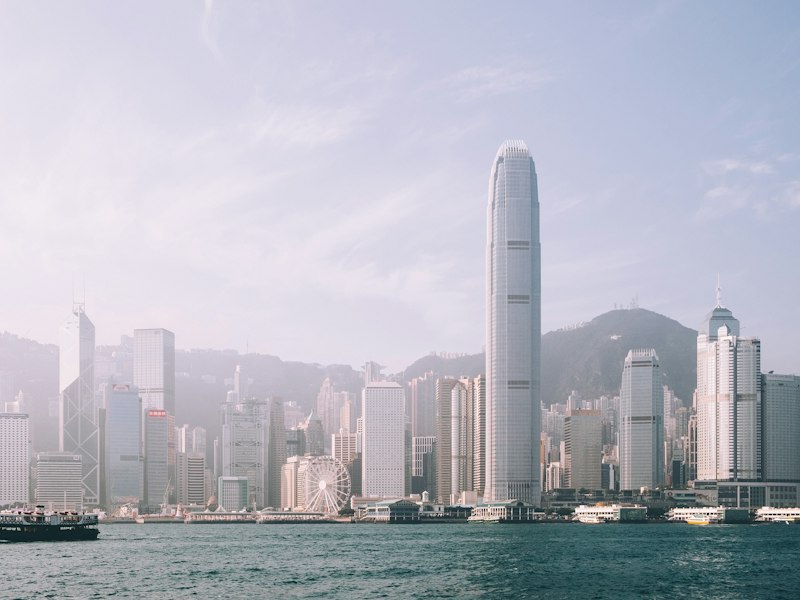
Short answer: For a family office, Singapore vs Hong Kong is now a contest between two light-touch licensing positions and two zero-tax vehicle regimes. Hong Kong offers lower salaries tax and proximity to mainland China; Singapore offers a statutory class exemption, broader fund incentives and the VCC. Hong Kong’s 2026 concession Bill had not been enacted at 11 October 2026.
Key facts at a glance
- Singapore: MAS class exemption for single family offices in force from 15 June 2026; existing offices must comply and notify MAS by 15 June 2027.
- Singapore tax incentives: S$20 million (section 13O) or S$50 million (section 13U) minimum fund size under MAS FDD Circular 05/2026; schemes run to 31 December 2029.
- Hong Kong: 0% profits tax for an eligible family-owned investment holding vehicle with at least HK$240 million in specified assets, from year of assessment 2022/23.
- Hong Kong: the Inland Revenue (Amendment) (Preferential Tax Regimes for Funds, Family-owned Investment Holding Vehicles and Carried Interest) Bill 2026 was gazetted on 12 June 2026 and is still before the Legislative Council.
- Hong Kong reports over 3,380 single family offices at end 2025 (commissioned market study); MAS reports more than 2,000 SFOs receiving tax incentives at end 2025. The two counts measure different things.
- Neither hub levies estate duty: Hong Kong abolished it from 11 February 2006, Singapore for deaths on or after 15 February 2008.
This article is general information only and is not legal, tax or investment advice. For matters needing legal advice, we work with a panel of experienced Singapore law firms.
Families weighing a family office: Singapore vs Hong Kong in 2026 face two regimes that moved within days of each other. Hong Kong gazetted a Bill on 12 June 2026 to widen its family office tax concession; Singapore’s revised family office licensing framework took effect three days later. This article compares the two on licensing, tax, residency, banking, currency and talent, using official sources from each government checked on 11 October 2026, and is careful to describe Hong Kong’s changes as proposals until they are enacted.
Does a single family office need a licence in Singapore or Hong Kong?
In both hubs, a genuine single family office managing only its own family’s assets generally does not need a fund management licence. The difference is form: Singapore codifies the position in a class exemption with conditions; Hong Kong relies on the scope of its licensing regime and regulatory guidance.
The Monetary Authority of Singapore (MAS) class exemption, in force from 15 June 2026, requires the single family office (SFO) to be incorporated in Singapore, to notify MAS within 14 days of starting operations, to maintain an account with a MAS-licensed bank for the SFO and each fund vehicle, and to file an annual return within four months of financial year end stating total assets under management. Key employees may hold a non-controlling stake of up to 10%, and their assets must not exceed 10% of the SFO’s assets under management in aggregate. Existing SFOs have until 15 June 2027 to comply.
In Hong Kong, InvestHK’s Director-General stated on 10 February 2026 that “single-family offices are not required to obtain a licence in Hong Kong in general”. InvestHK’s FamilyOfficeHK guidance, drawing on Securities and Futures Commission FAQs, explains that a single family office serving only related entities falls within an intra-group carve-out from asset management licensing, while a multi-family office will generally need a licence. Licensing in Hong Kong therefore turns on activity, and families should obtain a view on their facts.
How do the family office tax regimes compare?
Both hubs exempt qualifying investment income of a family vehicle, but on different tests: Hong Kong uses a single concession with an asset threshold; Singapore uses fund incentives with fund-size, staffing and spending conditions.
Hong Kong’s concession was introduced by the Inland Revenue (Amendment) (Tax Concessions for Family-owned Investment Holding Vehicles) Ordinance 2023 (Ord. No. 8 of 2023), which came into operation on 19 May 2023 and applies from year of assessment 2022/23. The Inland Revenue Department states that an eligible family-owned investment holding vehicle (FIHV) is taxed at 0% where the net asset value of specified assets is at least HK$240 million, the vehicle is managed in Hong Kong by an eligible single family office, and there are at least two full-time qualified employees in Hong Kong and at least HK$2 million of operating expenditure incurred in Hong Kong. Other conditions include at least 95% family ownership and a cap of 50 vehicles per family office.
Singapore’s incentives are set out in MAS FDD Circular 05/2026 (31 July 2026), which applies to SFO awards approved on or after 1 August 2026. A section 13O fund needs at least S$20 million, and a section 13U fund at least S$50 million, in designated investments at application and at the end of each basis period. The fund needs two (13O) or three (13U) investment professionals, at least one of whom is not a family member, each earning more than S$3,500 a month. Minimum annual spending is tiered: S$200,000 (all local business spending) for funds below S$250 million; S$500,000 (at least S$300,000 local business spending) from S$250 million to below S$2 billion; and S$1 million (at least S$500,000 local business spending) from S$2 billion. Funds also commit to local investment of the lower of 10% of assets or S$10 million. The 5% cap on physical precious metals was removed from 1 August 2026. Our guide to the annual evidence file for 13O and 13U covers how compliance is documented.
| Factor | Singapore | Hong Kong |
|---|---|---|
| SFO licensing | Class exemption with notification to MAS (from 15 June 2026) | Generally no licence for a genuine SFO; activity-based analysis |
| Vehicle tax concession | Sections 13O and 13U of the Income Tax Act 1947 | FIHV concession under Ord. No. 8 of 2023 |
| Asset threshold | S$20m (13O) or S$50m (13U) in designated investments | HK$240m net asset value of specified assets |
| Local staff | 2 (13O) or 3 (13U) investment professionals | At least 2 full-time qualified employees |
| Local spending | From S$200,000 a year, tiered by assets | At least HK$2 million operating expenditure |
| Corporate or profits tax | 17% headline | 8.25% on first HK$2m, 16.5% above |
| Top personal rate | 24% on resident income above S$1m | Standard rate 15%, or 16% on net income above HK$5m (from 2024/25) |
| Currency | Singapore dollar | HKD linked to USD within HK$7.75 to 7.85 since 17 October 1983 |
What would Hong Kong’s 2026 Bill change, and is it law yet?
It is not yet law. The Bill was gazetted on 12 June 2026, received its first reading on 24 June 2026 and completed Bills Committee clause-by-clause scrutiny by 12 August 2026; the government said it aims to resume the second reading debate in the second half of 2026.
The Inland Revenue Department’s 12 June 2026 release lists the proposed changes, including “removing the 5 per cent threshold requirement for incidental transactions”. The Legislative Council’s legal adviser reported that the same changes are applied to FIHVs. A Financial Services and the Treasury Bureau paper of 2 March 2026 proposed widening qualifying investments to include overseas property, loans and private credit, digital assets, precious metals and carbon credits, among others. If enacted, the changes apply to years of assessment beginning on or after 1 April 2025. Some commentary describes a switch from a net asset value test to an asset value test for FIHVs; the official papers we read do not say this, and families should check the enacted text before relying on it.
For a Singapore comparison, the practical point is that both hubs are converging on wide eligible-asset lists. The decision will turn less on what assets qualify and more on where the family wants its investment team, its bankers and its heirs.
Which hub has more family offices?
The figures are not comparable, so neither government’s number settles the question.
The Hong Kong Government announced on 10 February 2026 that “over 3 380 single-family offices were in operation in Hong Kong as of the end of 2025”, according to a market study commissioned by InvestHK and conducted by a professional services firm. In a written parliamentary reply on 5 August 2026, MAS stated that “As of end December 2025, more than 2,000 Single Family Offices (SFOs) receive tax incentives.” The Hong Kong figure estimates all single family offices; the Singapore figure counts only those with a tax incentive. Singapore’s new notification regime will give MAS a fuller count over time.
How do residency routes for principals compare?
Hong Kong’s New Capital Investment Entrant Scheme has a lower entry ticket; Singapore’s Global Investor Programme asks for more but ties residency to a family office with substance.
Under Hong Kong’s New Capital Investment Entrant Scheme, an applicant invests at least HK$30 million, including HK$3 million in the CIES Investment Portfolio. Real estate counts up to HK$10 million, with residential property eligible only above a price threshold. From 1 March 2026, a private holding company set up less than six months earlier may be used. InvestHK reported 3,166 applications and 1,762 formal approvals as at 28 February 2026.
Singapore’s Economic Development Board (EDB) offers three Global Investor Programme options. Option C requires a single family office with at least S$200 million in assets under management, of which S$50 million is deployed in specified investments within 12 months of approval; the application fee is S$20,000. Renewal of the five-year re-entry permit depends on continued investment, hiring and residence conditions. Our guide to GIP Option C and fund tax incentives explains how the two programmes interact, and Singapore Employment Agency covers the Employment Pass route that many principals use instead.
How do banking, currency and talent compare?
Both hubs have deep private banking markets. The differences lie in currency regime, the mainland China gateway and the depth of each fund management industry.
The Hong Kong Monetary Authority maintains the Linked Exchange Rate System within HK$7.75 to 7.85 per US dollar, in place since 17 October 1983. Singapore’s dollar is not pegged. MAS’s Singapore Asset Management Survey 2025 reports Singapore AUM of S$6.7 trillion, up 10%, with 76% sourced from abroad, 1,320 licensed fund managers and 1,406 VCCs with 3,443 sub-funds at 31 December 2025. For a family that wants a fund vehicle with umbrella and sub-fund capability, the Singapore variable capital company (VCC) under the Variable Capital Companies Act 2018 is a central part of the offer; our earlier comparisons with Hong Kong’s open-ended fund company cover the vehicle question in detail.
Singapore’s new MAS-licensed bank condition means the SFO’s main accounts must sit with a Singapore-regulated institution. Families running both hubs should design their custody so that Singapore vehicles meet this condition while Hong Kong vehicles bank where their managers operate. Our note on choosing an SFO, MFO, EAM or private bank covers the service models.
Family office Singapore vs Hong Kong: how should a family choose?
- Locate the decision-makers. The concession in each hub requires management in that hub; split teams create dual-residence and permanent establishment questions.
- Check the family’s asset mix against both eligible-asset lists, treating Hong Kong’s proposed wider list as pending until enacted.
- Compare the substance budget: Hong Kong’s HK$2 million operating expenditure against Singapore’s tiered spending and investment professional requirements.
- Decide on residency for the principal and heirs, and test each programme’s renewal conditions against how the family actually lives.
- Plan banking and custody, including Singapore’s MAS-licensed bank condition.
- Reassess once Hong Kong’s Bill is enacted and its final text published.
Families from Greater China may also find our note on Singapore for UHNW families from Greater China useful.
Frequently asked questions
Is Hong Kong’s new family office tax law in force?
Not as at 11 October 2026. The 2026 Bill was gazetted on 12 June 2026 and has completed Bills Committee scrutiny, but the Legislative Council has not passed it. If enacted, it will apply from year of assessment 2025/26.
What is the minimum for Hong Kong’s FIHV concession?
At least HK$240 million net asset value of specified assets, managed by an eligible single family office in Hong Kong with at least two qualified full-time employees and HK$2 million of local operating expenditure.
Does Singapore have a minimum AUM for a family office?
The MAS licensing exemption conditions contain no AUM minimum. Minimums apply to the tax incentives (S$20 million for 13O, S$50 million for 13U) and to GIP Option C (S$200 million).
Can a family use both Singapore and Hong Kong?
Yes. Many Greater China families keep entities in both. The key is a documented operating model showing where each vehicle is managed and where investment decisions are taken.
Which hub taxes salaries less?
Hong Kong’s standard salaries tax rate is 15%, rising to 16% on net income above HK$5 million. Singapore’s top resident rate is 24% on income above S$1 million.
Sources
- Inland Revenue Department: tax concessions for family-owned investment holding vehicles
- Hong Kong Government news, 12 August 2026: Bills Committee completes scrutiny
- MAS: revised framework for single family offices
- EDB: Global Investor Programme
Raffles Corporate Services helps family offices and fund managers with VCC incorporation, single family office set-up under the MAS framework and ongoing corporate secretarial and compliance work in Singapore, including for families that keep a Hong Kong office. Email hello@rafflescorporateservices.com or Call/SMS/WhatsApp +65 8501 7133, or visit Raffles Corporate Services.
Last reviewed: 11 October 2026. The Editorial Team, Variable Capital Companies Act.