Singapore VCC insights
Malaysia Family Office Tax Incentive: Forest City SFO Scheme vs Singapore 13O and 13U
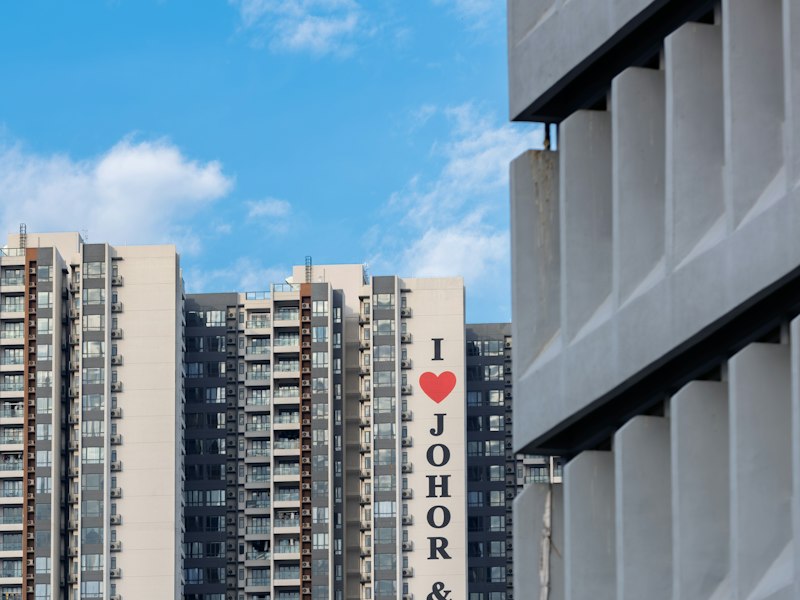
Short answer: Malaysia offers a 0% tax rate for up to 20 years (10 plus 10) to a single family office vehicle based on Pulau 1 of the Forest City Special Financial Zone, with RM30 million minimum assets, two local staff and RM500,000 yearly spending. Singapore’s 13O and 13U schemes demand more people and assets but impose no location test.
Key facts at a glance
- Malaysia: Income Tax (Single Family Office Incentive Scheme) (Pulau 1 of Forest City Special Financial Zone) Rules 2025, P.U.(A) 350/2025, gazette dated 3 October 2025; tax rate of zero per cent.
- Malaysia: Securities Commission Malaysia Guidelines SC-GL/5-2025, first issued 9 October 2025, set RM30 million minimum assets, two full-time officers and RM500,000 local spending for the first 10 years.
- Malaysia: the vehicle needs a dedicated office of at least 450 square feet in Pulau 1, Forest City, and must be incorporated on or after 1 September 2024.
- Singapore 13O: S$20 million in designated investments and two qualifying investment professionals; 13U: S$50 million and three (Income Tax Act 1947, MAS page referencing FDD Circular 05/2026).
- Singapore: tiered local spending of S$200,000, S$500,000 or S$1 million depending on assets in designated investments.
- Singapore: MAS revised single family office framework in force since 15 June 2026; existing offices have until 15 June 2027 to comply.
This article is general information only and is not legal, tax or investment advice. For matters needing legal advice, we work with a panel of experienced Singapore law firms.
The Malaysia family office tax incentive is now a real alternative on Singapore’s doorstep. Since the Ministry of Finance gazetted the Forest City rules in October 2025, families with assets on both sides of the Causeway have asked a fair question: does a 0% rate in Johor beat a fund tax exemption in Singapore? This article compares the two regimes condition by condition, using only official sources: the Securities Commission Malaysia (SC) incentive page, Guidelines and FAQs, and the Monetary Authority of Singapore (MAS) scheme page and media release. All sources were checked on 24 October 2026.
What is the Malaysia family office tax incentive in Forest City?
It is a concessionary income tax rate of zero per cent for a single family office vehicle (SFOV) operating from Pulau 1 of the Forest City Special Financial Zone in Johor. The SC certifies eligibility each year on behalf of the Ministry of Finance.
The legal basis is the Income Tax (Single Family Office Incentive Scheme) (Pulau 1 of Forest City Special Financial Zone) Rules 2025, published as P.U.(A) 350/2025. The SC’s media release of 6 October 2025 states that the gazette is dated 3 October 2025 and that, with gazettement, the scheme is “now fully operational”. The scheme itself was launched in September 2024.
According to the SC, the exemption covers the chargeable income of an SFOV that holds assets, and invests, for the single family, and the zero rate “applies to all income, including capital gains and foreign-sourced income”. The SC also describes a one-off exemption from capital gains tax and stamp duty on transferring qualifying assets into the SFOV at establishment, and states that the framework exempts dividend income for shareholders. The incentive runs for an initial assessment period of 10 years from the SFOV’s first SC certification, followed by a subsequent period of 10 years on stricter conditions.
Two companies are required. The SFOV is a fund company incorporated under Malaysia’s Companies Act 2016, wholly owned by members of one family, resident in Malaysia and operating in Pulau 1. A separate single family office management company (SFO MC), related to the SFOV, manages its assets. The SFO MC need not sit in Pulau 1 and, under the SC FAQs, receives no tax incentive: it pays Malaysia’s prevailing corporate tax rate.
What conditions must a Forest City family office meet each year?
The SFOV must meet the Tax Rules plus the SC’s additional conditions at the end of each year of assessment. The thresholds step up after the first 10 years.
| Condition | Initial period (first 10 years) | Subsequent period (next 10 years) |
|---|---|---|
| Assets under management (AUM) in permitted investments | At least RM30 million | At least RM50 million |
| Local eligible and promoted investments | RM10 million or 10% of AUM, whichever is lower | RM10 million or 10% of AUM, whichever is higher |
| Full-time officers | At least two, one an investment professional | At least four |
| Local operating expenditure | At least RM500,000 a year | At least RM650,000 a year |
| Office | Physical, dedicated office of at least 450 square feet in Pulau 1, shared only with the SFO MC | |
| Audited financial statements | Submitted annually for tax certification | |
The officer test is more demanding than the headcount suggests. Under paragraph 3.11 of the Guidelines, each officer must earn a gross monthly salary of at least RM10,000, be a Malaysian tax resident throughout the year of assessment and be based in Pulau 1. The investment professional needs at least two years of relevant experience and a degree or recognised finance qualification. Local expenditure counts only if paid to Malaysian-registered companies or local service providers.
Further conditions apply. The family’s funds and assets must not originate from, or be owned by nationals or residents of, a jurisdiction on the Financial Action Task Force (FATF) black or grey list. The SFOV must keep an account with a bank licensed under Malaysia’s Financial Services Act 2013, and first-year local investments must be new money. Investments in promoted categories, such as companies with approved projects in the Johor-Singapore Special Economic Zone, count at 1.5 times their value towards the local investment test.
How do Singapore’s 13O and 13U conditions compare?
Singapore asks for more assets and more investment staff, but sets no location requirement and counts a broader range of investments. The MAS scheme page states that fund vehicles managed by family offices must meet the criteria “throughout the incentive period”.
The figures below come from the MAS page for family offices, which refers readers to FDD Circular 05/2026. We have not converted ringgit to Singapore dollars, because each regulator tests in its own currency.
| Condition | Malaysia: Forest City SFOV (first 10 years) | Singapore: section 13O | Singapore: section 13U |
|---|---|---|---|
| Minimum assets | RM30 million in permitted investments | S$20 million in designated investments | S$50 million in designated investments |
| Investment staff | Two full-time officers, one an investment professional; each paid at least RM10,000 a month | Two qualifying investment professionals, at least one not a family member | Three qualifying investment professionals, at least one not a family member |
| Staff residence and pay | Malaysian tax resident, based in Pulau 1 | Singapore tax resident; paid more than S$3,500 a month; more than 50% of time on qualifying activity | |
| Annual local spending | RM500,000 | S$200,000 (below S$250 million), S$500,000 (S$250 million to below S$2 billion), S$1 million (S$2 billion and above) | |
| Local investment | Lower of RM10 million or 10% of AUM; 1.5x for promoted investments | Lower of S$10 million or 10% of AUM in designated investments; 2x for listed equities on approved exchanges and certain other categories | |
| Bank account | Licensed bank under the Financial Services Act 2013 | Private banking account with a MAS-licensed financial institution | |
| Location | Office in Pulau 1, Forest City | No designated zone | |
For the full Singapore thresholds, including how the old S$10 million figure was replaced, see our guide on family office minimum AUM in Singapore. The staffing rules are covered in our note on hiring the investment professionals 13O and 13U require.
Where do the two regimes differ most in practice?
Four structural rules matter more than the headline rates: where decisions are made, where staff live, which assets count, and what a bad year costs.
First, investment decisions must be taken in Malaysia. The SC FAQs state that the SFO MC “is not permitted to delegate discretionary investment management to offshore fund managers”. Offshore institutions may act only as execution and custody agents. A Singapore adviser or family office cannot therefore run the Forest City portfolio on a discretionary basis. The SFO MC may outsource portfolio management only to a Malaysian holder of a Capital Markets Services Licence.
Second, residence pulls people to Johor. Both Malaysian officers must be Malaysian tax residents based in Pulau 1. Singapore’s investment professionals must be Singapore tax residents. In practice, one person will rarely satisfy both tests, so a family running both regimes should plan for separate teams.
Third, the asset rules differ. Malaysia counts real estate only if it is residential or commercial property in Forest City, and excludes shares of companies whose sole business is holding Malaysian property. Tokenised capital market products and digital assets do not count. The SFOV may still hold such assets, but they do not count towards the RM30 million. Singapore’s designated investments list is separate; our article on designated investments for 13O covers the current debate.
Fourth, a failed year costs time in Malaysia. According to the SC FAQs, an SFOV that misses a condition pays the prevailing corporate rate for that year, and the year still counts towards its 10-year period. The clock is not extended.
How does the application process work in each country?
Malaysia uses a two-step SC certification, while Singapore separates MAS notification of the family office from the MAS tax incentive application for the fund.
For a Forest City SFOV, the SC sets out the route as follows:
- Consult the SC, presenting the business plan and ownership structure. Consultation is mandatory for conditional approval.
- Incorporate the SFOV (on or after 1 September 2024) and the SFO MC, and open a non-retail bank account with a licensed institution. The SC requires evidence of enhanced customer due diligence on the account.
- Apply to the SC for conditional approval, in which the structure, assets and operations are reviewed. Applications go by email to the SC with the documents in its Application Kit.
- Set up the Pulau 1 office, hire the officers and transfer the assets.
- At each financial year end, submit audited financial statements and apply for annual tax certification. The SC certification letter is attached to the income tax return filed with the Inland Revenue Board of Malaysia.
In Singapore, the family office itself relies on MAS’s class exemption from fund management licensing. The MAS media release of 12 June 2026 explains that qualifying single family offices “need only notify MAS of their operations”, keep an account with a MAS-licensed bank and file an annual return with total assets under management and the name of the bank. The fund vehicle then applies separately for 13O or 13U. Our article on the exempt SFO’s continuing obligations sets out the post-June 2026 duties.
What about banking, capital flows and residence for the family?
Both countries link the incentive to residence options and banking, but on different terms.
On capital flows, the SC FAQs explain that entities approved to operate in the Forest City zone may register with Bank Negara Malaysia (BNM) for Foreign Exchange Policy flexibilities. These include no limit on foreign currency borrowing from non-residents, for use abroad or within the zone, and no limit on investing in foreign currency assets when the funds come from abroad or from non-residents. The flexibilities last five years, renewable for five more with BNM approval, and require an annual compliance declaration.
On residence, the SC describes a dedicated fast-track Residence Pass-Talent visa for families and professionals under the scheme, offering residency of up to 10 plus 10 years for principals, dependants and key employees. Singapore has no residence pass tied to 13O or 13U; family members and staff use the general pass framework or the Economic Development Board’s Global Investor Programme. Singapore Employment Agency advises on the pass route for principals and investment staff.
Can a Johor-linked family run both a Singapore and a Forest City office?
Yes, provided the two offices are genuinely separate: separate vehicles, separate staff, separate decision-making and separate pools of assets.
A practical pattern for families with Johor businesses or Bursa Malaysia holdings is to place Malaysian assets, such as Bursa-listed securities, shares in operating Malaysian companies and Forest City property, in a Forest City SFOV, and keep the global portfolio in a Singapore fund vehicle with a 13O or 13U award, managed by a Singapore team.
Three points need care. Each office must meet its own staffing and spending tests in its own currency. The no-offshore-delegation rule means the Singapore team cannot direct the Malaysian portfolio. And because the Malaysian definition of a single family requires lineal descendants of one ancestor, the same family scope should be documented consistently in both places. Families comparing other regional options may also find our Labuan PCC and Singapore VCC comparison useful, since Labuan is a separate Malaysian regime with different rules.
Which base suits which family?
Forest City is attractive for families who already have Malaysian wealth, are prepared to put real people in Johor and want a fixed 20-year horizon. Singapore suits families with global portfolios who want deeper banking and a broader investment universe without a location condition.
The Malaysian scheme offers a zero rate stated to cover all income, a 20-year horizon in gazetted rules, one-off transfer relief and a visa track. Its constraints are two companies, an office on one island, Malaysian-resident staff, onshore discretionary management and a narrow real estate rule. The SC reported six conditional approvals, with indicative assets of close to RM400 million, as at 6 October 2025, so the market is still young.
Singapore asks more of the fund in staff and spending as assets grow, but the family office itself is set up by notification and can operate anywhere in Singapore. For many families the answer is not either-or, provided each structure stands on its own.
Frequently asked questions
Is the Forest City 0% rate law or only a policy announcement?
It is law. The Income Tax (Single Family Office Incentive Scheme) (Pulau 1 of Forest City Special Financial Zone) Rules 2025 were gazetted as P.U.(A) 350/2025 on 3 October 2025, and the SC issued its Guidelines SC-GL/5-2025 on 9 October 2025.
Can a foreign family use the Malaysian scheme?
Yes. The SC FAQs confirm a single family may consist of Malaysian or foreign individuals, provided its funds and assets do not originate from, and are not owned by nationals or residents of, FATF black-listed or grey-listed jurisdictions.
Can an existing Malaysian holding company become the SFOV?
No. The SFOV must be incorporated on or after 1 September 2024. The SFO MC, by contrast, may be an existing company.
Does the Malaysian scheme cover multi-family offices?
No. The SC states the scheme is only for single family offices, and multi-family offices are subject to fund management licensing under Malaysia’s Capital Markets and Services Act 2007.
Can a Singapore family office manage a Forest City vehicle?
Not on a discretionary basis. The SC FAQs prohibit delegation of discretionary investment management to offshore managers; offshore firms may act only for execution and custody.
Sources
- Securities Commission Malaysia: Single Family Office tax incentive and key requirements
- Securities Commission Malaysia: Guidelines on Single Family Office Incentive Scheme, SC-GL/5-2025
- Securities Commission Malaysia: FAQs on the SFO Incentive Scheme (revised 9 October 2025)
- MAS: Fund Tax Schemes for Family Offices
- MAS: Revised framework for single family offices to take effect on 15 June 2026
Raffles Corporate Services helps families weighing Singapore against regional alternatives with VCC incorporation, family office set-up and ongoing 13O and 13U compliance. Email hello@rafflescorporateservices.com or Call/SMS/WhatsApp +65 8501 7133, or visit Raffles Corporate Services.
Last reviewed: 24 October 2026. The Editorial Team, Variable Capital Companies Act.