Singapore VCC insights
Standalone VCC vs Umbrella VCC: How to Choose the Right Structure
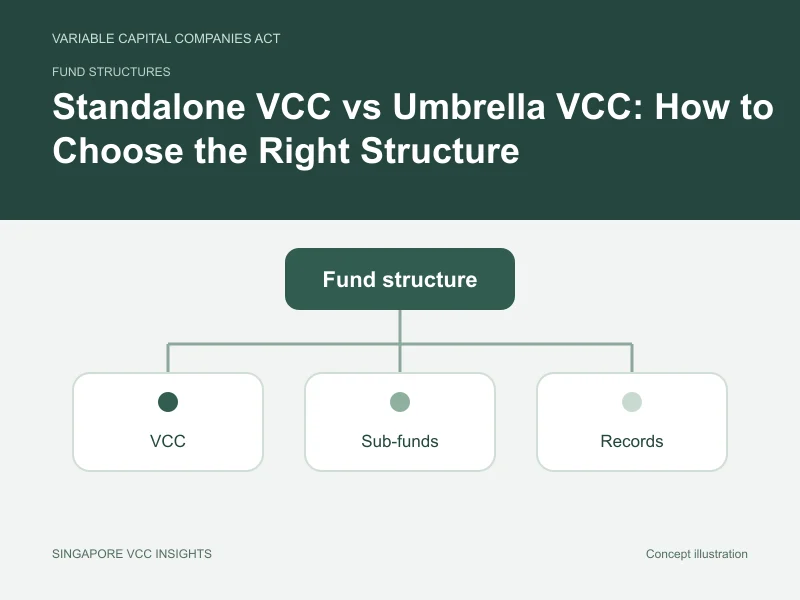
Choose a standalone VCC when you expect to operate one fund and want a straightforward structure. Consider an umbrella when there is a credible need for separate portfolios or investor groups under a shared company. Neither choice is automatically cheaper over the life of the fund.
Start with the second fund, not the first
An umbrella is often proposed because it can accommodate later sub-funds. Test how real that plan is. Is there a second strategy with committed investors and a likely launch date, or only a possibility?
If the second strategy never launches, the first fund still needs to justify the structure and its administration. Ask providers to quote both a one-fund operation and the expected multi-fund operation.
Different fees do not always require different sub-funds
Two groups investing in the same portfolio may need different share classes. Two portfolios with different assets, liabilities or redemption terms may need separate sub-funds. Counsel should explain which difference requires legal segregation and which can be handled within the same fund.
For example, a lower management fee for an early investor is different from running a liquid bond portfolio alongside a ten-year private equity portfolio.
Shared oversight can help, but also creates conflicts
An umbrella can share its board and providers. That makes common systems possible, but creates questions about allocating costs and management attention. One sub-fund should not quietly bear expenses incurred for another.
Consider what happens if one strategy closes, one manager relationship ends, or one investor group disputes a valuation. The answer belongs in the documents and service agreements before launch.
Make the decision in writing
Record the expected strategies, investors, dealing arrangements, provider costs and likely exit path. Choose the structure that supports those facts. Do not rely on a promise that an umbrella will make every future change easy.
ACRA explains the two VCC forms. Our operating decision matrix takes the comparison into accounts, contracts and reporting.