Singapore VCC insights
VCC Sub-Funds and Segregated Assets: How Ring-Fencing Works
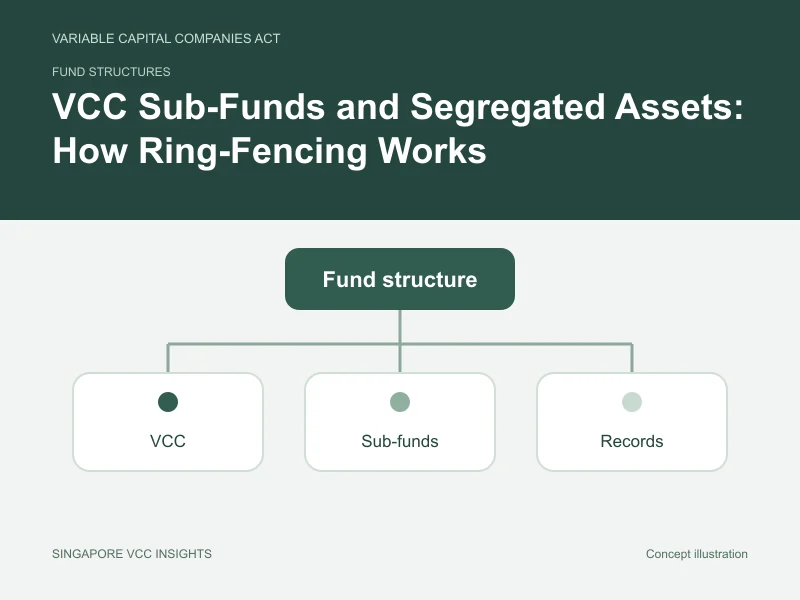
An umbrella VCC has one legal identity, but Singapore law segregates the assets and liabilities of its sub-funds. A liability attributable to one sub-fund is not supposed to be paid from another sub-fund’s assets.
That protection is important. It is also different from a promise that investors cannot lose money, or that two sub-funds cannot suffer the same market loss.
A simple example
Suppose Sub-Fund A invests in listed bonds and Sub-Fund B holds private companies. A service invoice incurred solely for B should be recorded against B. The fact that both sit inside the same VCC is not a reason to charge it to A.
A shared expense needs a defensible allocation. For example, the board may approve a method for dividing a common administration cost. The method should reflect the service provided and be recorded, rather than changing opportunistically when one portfolio has more cash.
Make the separation visible
Contracts should identify the umbrella and relevant sub-fund. Accounting records should show which assets, liabilities, income and expenses belong to each portfolio. Bank and custody arrangements must support reliable attribution and reconciliation.
Before the first trade, ask the administrator to trace a transaction from the signed agreement to the cash movement and final ledger. If the sub-fund disappears from that chain, fix the process.
Cross-border assets need another check
A Singapore statutory rule is not a substitute for advice on a foreign court, asset registry or counterparty’s insolvency process. Where assets or contracts are overseas, ask local counsel how the structure will be recognised and enforced.
The VCC Act contains the segregation framework. Our sub-fund contract checklist focuses on the documents that help put it into practice.