Singapore VCC insights
VCC Act 2018: Key Legal Features for Fund Managers
The VCC Act is the legal framework for the company that houses a fund. It answers questions about the company’s structure, officers, shares, records and closure. It does not, by itself, settle every question about running or marketing the fund.
A useful way to read the Act is to connect each feature to a document or operating decision.
Capital follows the fund’s terms
Variable capital lets a fund issue and redeem shares without using the ordinary company’s capital reduction process for each withdrawal. The practical work sits in the constitution and offering terms: pricing, dealing dates, notice periods, suspension powers and any restrictions on redemption.
A manager should be able to explain what happens when a withdrawal request arrives during a period when the fund cannot sell its assets. A clause copied from a liquid fund may be unsuitable for a portfolio of private investments.
An umbrella needs more than a label
The statutory segregation of sub-fund assets and liabilities is a central feature. Contracts, account records and expense allocations must make the relevant sub-fund identifiable. Shared service providers do not remove that need.
Ask the administrator to demonstrate how it records a shared audit invoice and how the board reviews the allocation. That is a more useful control check than merely confirming that the company has an umbrella constitution.
The board still has responsibilities
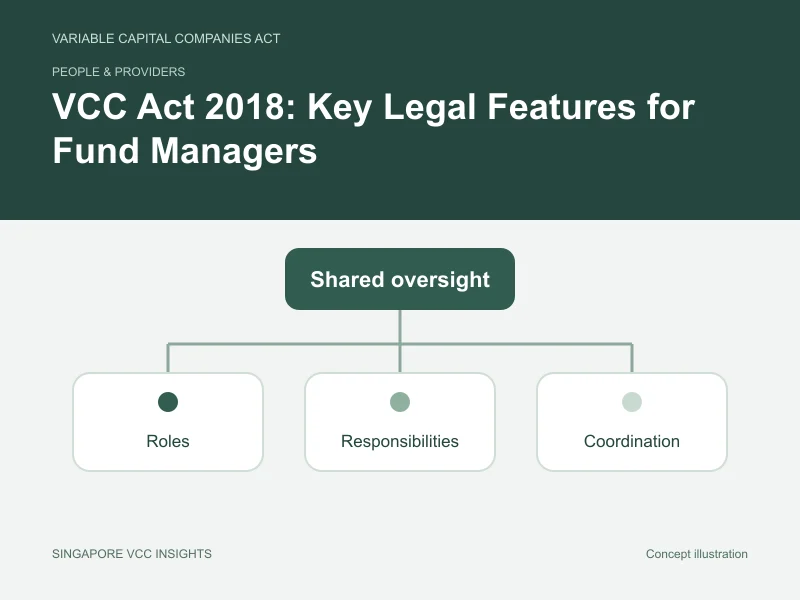
Appointing a manager, secretary and administrator divides the work; it does not make the board irrelevant. Directors need information that lets them challenge valuations, conflicts, liquidity decisions and missed obligations.
Read the other rulebooks too
Use the current VCC Act on Singapore Statutes Online for the corporate framework. Check MAS requirements for the manager, offering route and anti-money laundering obligations. Check IRAS guidance separately for tax treatment.
For a new fund, keep a short compliance map showing the question, applicable authority, responsible adviser and document that records the answer. That prevents an incorporation approval from being mistaken for approval of the whole fund business.