Singapore VCC insights
VCC master-feeder structures — Eligibility and requirements checklist
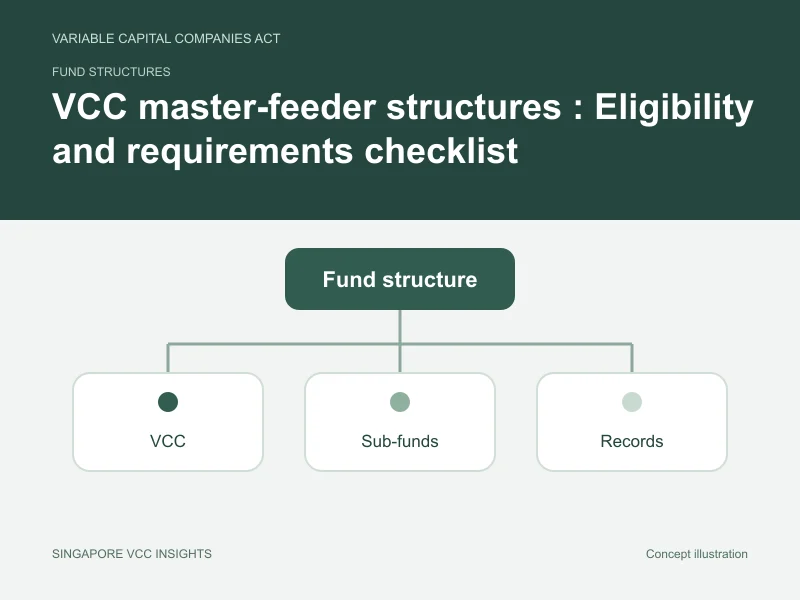
VCC master-feeder structures use a Singapore Variable Capital Company as a feeder that channels investor capital into a single master fund, or as the master into which several feeders invest. This checklist explains when the structure fits, what MAS and ACRA expect, and the documents required to set it up.
Raffles Corporate Services works with a panel of corporate and employment law firms; this article is general information, not legal advice.
What a master-feeder structure is
In a master-feeder arrangement, investors subscribe into one or more feeder funds, and the feeders in turn invest substantially all of their assets into a common master fund where the actual portfolio is managed. The design pools trading in one place while allowing feeders to be tailored to different investor bases, tax positions or jurisdictions. A VCC can sit on either side: as a feeder into an offshore master, or as the Singapore master receiving capital from feeders.
Why use a VCC for the feeder or master
The VCC gives the structure legal personality under Section 17 of the Variable Capital Companies Act 2018, a flexible capital structure that can issue and redeem shares at net asset value, and access to Singapore’s fund tax incentives where conditions are met. Where an umbrella VCC is used, several feeders can be run as sub-funds with segregation under Section 29 of the Variable Capital Companies Act 2018, keeping each feeder’s assets ring-fenced. Our note on VCC for fund-of-funds structures covers a closely related design.
Eligibility and requirements checklist
Confirm the essentials before committing: a permissible, MAS-regulated fund manager is appointed to the VCC; the master and feeder mandates are aligned so the feeder genuinely tracks the master; the constitution and offering documents describe the flow of capital and fees clearly; there is no double-charging of management or performance fees between feeder and master; and the tax analysis, including any 13O or 13U incentive under the Income Tax Act 1947, holds at the level where the incentive is claimed. AML and KYC must sit at the feeder level where investors subscribe.
Documents required
Prepare the VCC constitution, the feeder and master offering documents or private placement memoranda, the investment management agreement, the administration and custody agreements, the subscription and redemption forms, and a fee schedule that shows the combined feeder-plus-master cost. Where the master is offshore, add the master’s constitutional documents and evidence of its regulatory status.
Cost and timeline
A VCC feeder or master typically costs from S$10,000 to S$30,000 to establish, depending on complexity and whether an umbrella with sub-funds is used, plus ongoing audit, administration, fund-manager and tax-filing costs. Realistic timelines run from six to twelve weeks, driven mainly by drafting the offering documents and completing the fund manager’s onboarding and MAS notifications, rather than by the ACRA incorporation itself, which is quick.
Common mistakes and gotchas
Fee stacking is the classic problem: charging full management and performance fees at both feeder and master levels erodes investor returns and invites complaints. Misaligned mandates are another, where the feeder is permitted to do things the master cannot, breaking the pass-through logic. Teams also overlook that tax incentives are claimed at a specific entity and on specific conditions, so a feeder may not automatically inherit the master’s treatment. For the broader entity-choice picture, compare with our guide on the foreign-sourced income exemption and, on governance, the corporate secretary’s role in venture capital.
Official sources to check
Confirm the design against the primary materials: the Monetary Authority of Singapore explainer on the VCC and the registration and filing guidance from the Accounting and Corporate Regulatory Authority.
VCC master-feeder structures: the takeaways
Well-designed vcc master-feeder structures pool trading in the master while tailoring feeders to different investors, avoid double-charging fees, keep feeder and master mandates aligned, and test any tax incentive at the entity that claims it. The VCC’s flexible capital and segregation make it a natural fit.
FAQs
Can a single VCC be both master and umbrella? An umbrella VCC can host feeder sub-funds that invest into a master; the master itself is usually a separate vehicle.
Does the feeder need its own audit? Yes. Feeder and master are audited separately, even though the feeder mainly holds an interest in the master.
How are fees usually arranged? Fees are typically charged at one level, most often the feeder, to avoid double-charging investors.
Can the master be offshore? Yes. A Singapore VCC feeder can invest into an offshore master, subject to tax and regulatory analysis.
Is a fund manager required? Yes. The VCC must appoint a permissible fund manager, which is central to eligibility and to any tax incentive.
Need help with this? Call, SMS or WhatsApp +65 8501 7133, or email hello@rafflescorporateservices.com. Raffles Corporate Services works with a panel of corporate and employment law firms; this article is general information, not legal advice.