Singapore VCC insights
What Is a Variable Capital Company (VCC) in Singapore?
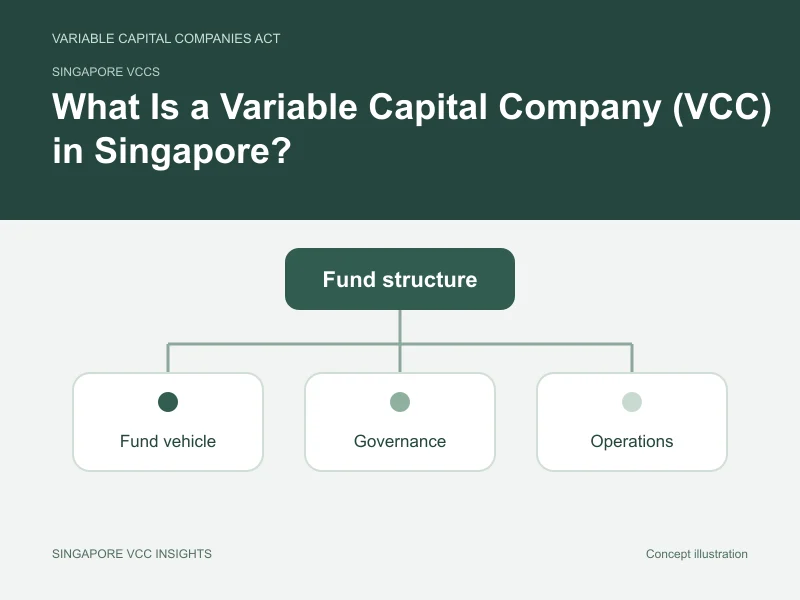
A variable capital company, or VCC, is a Singapore company designed to hold and manage an investment fund. Investors own shares in it. A fund manager makes investment decisions under an agreed mandate, while the VCC owns the fund assets.
That distinction matters. Setting up the company does not give its founder permission to manage other people’s money. The VCC needs a permissible fund manager, and the way its shares are offered to investors needs a separate regulatory assessment.
What makes it different from an ordinary company?
A VCC can issue and redeem shares to accommodate investors entering and leaving a fund. It can also distribute capital, subject to its governing documents and applicable requirements. These features suit investment funds whose capital changes over time.
They do not mean that investors can withdraw whenever they like. A private equity fund may lock money up for years. A liquid securities fund might permit monthly redemptions. The constitution and offering documents must explain the actual arrangement.
One fund, or several under one company
A standalone VCC houses one fund. An umbrella VCC contains sub-funds, with assets and liabilities segregated between them under Singapore law. Each sub-fund needs separate records; it is not a separate company.
For example, a manager could run a bond strategy and a private equity strategy in different sub-funds. Investors would need to know which sub-fund their shares relate to. A share class with a different fee is not automatically a separate sub-fund.
Is it suitable for your project?
Start with three questions: who will manage the investments, who will invest, and how will investors get their money back? If those answers are unsettled, incorporation is premature.
A VCC brings recurring work: governance, administration, audited accounts, filings and investor checks. Tax incentives require their own eligibility assessment and approval; they do not arrive with the registration certificate.
Read ACRA’s explanation of VCC features and eligibility before comparing formation packages. For a launch sequence, see our setup guide.